
Basement Water Cleanup in Twin Cities, MN
A wet basement is a problem you can get ahead of. Cleanup follows a clear order: stop the source, get the water out, then dry what stayed wet.
Start with the source, then the water.
Call about standing water, a failed sump pump, or a leak that reached the basement. You get safe first steps and a plan for the cleanup.
Where basement water comes from
Most basement flooding in this area traces back to a short list of causes:
- Heavy rain overwhelming gutters and grading, then seeping in at the foundation.
- A sump pump that failed or lost power during a storm.
- A burst or leaking supply line at a washer, water heater, or utility sink.
- A floor drain or sewer line backing up.
- Snowmelt or a frozen-line break in late winter.
The source is not always obvious.
- Water travels along footings and can surface far from where it got in.
- A one-time storm leak and a recurring seepage problem look alike at first.
- Finding the cause matters as much as removing the water.
- Describe what you see when you call. It helps sort the cause quickly.
What basement cleanup includes
Pump and extract
Standing water gets pumped out first. Extractors then pull water from carpet and low spots.
Clear and clean
Soaked pad, ruined boxes, and damaged materials come out. Surfaces get cleaned before drying starts.
Dry and verify
Air movers and dehumidifiers run until moisture checks show floors and walls are dry.
Wet carpet and damp walls do not dry on their own.
Call to talk through getting the water out and drying the space properly. Use the request path if you cannot call right now.

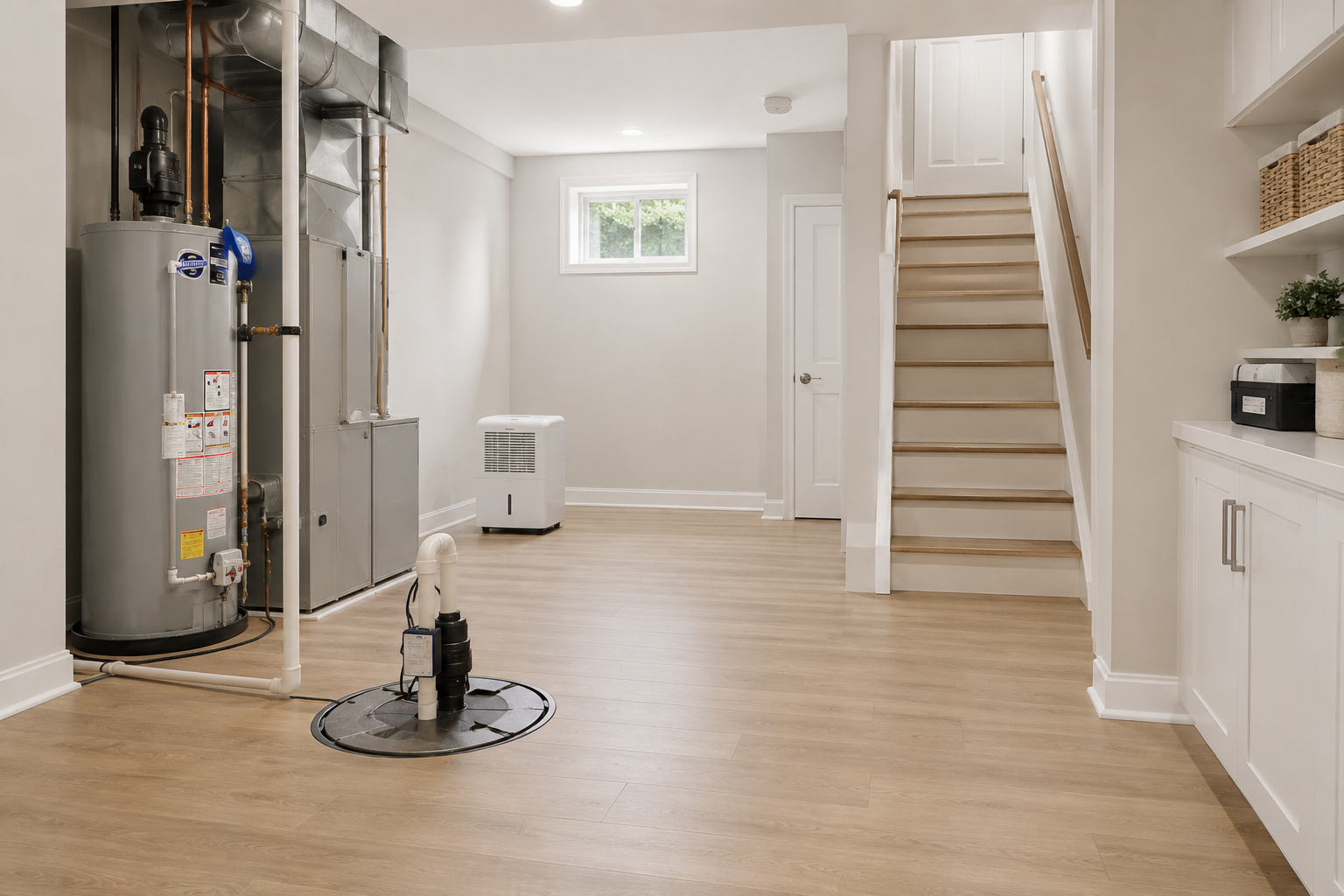
Used as a restrained support image. It is not presented as real job proof or before-and-after work.
Water heaters, furnaces, and laundry areas
Basement water usually ends up around the mechanicals, and that raises questions a wet living room does not.
- Stay away from appliances standing in water until power to the area is off.
- A water heater or furnace that got wet should be checked before it runs again.
- Laundry supply lines are a frequent leak source and get looked at during cleanup.
- Stored items near mechanicals get moved out early so drying can reach the floor.
Finished basement? The order matters more.
- Carpet pad soaks through first and usually comes out even when carpet can be saved.
- Baseboards and lower drywall hold moisture you cannot see.
- Furniture on wet carpet gets moved or blocked up early.
- Drying a finished space too slowly is how musty smells start.
Drying is the step people skip
A basement can look dry days before it actually is. Concrete and framing hold moisture long after the surface feels fine.
- Drying equipment stays until moisture readings come down, not just until the floor looks dry.
- Slab floors, sill plates, and lower drywall get checked separately.
- A follow-up moisture check confirms nothing kept wicking after the equipment left.
Why the follow-up check matters
- Musty smells weeks later usually mean something stayed damp.
- Moisture left in framing raises mold questions you do not want.
- New flooring over a damp slab is money spent twice.
- A dry reading at the end is what closes the job properly.
When to call, and when it can wait
Call now
- Standing water anywhere in the basement.
- A drain or sewer backup reaching the floor.
- Water near the electrical panel, outlets, or appliances.
- A failed sump pump with more rain on the way.
- Water spreading into finished rooms.
Likely fine to schedule
- A damp spot that has not grown in days.
- An old stain that is dry to the touch.
- Minor seepage that already stopped.
- A musty smell with no visible water.
If you are not sure which list you are on, a short call sorts it out.
Basement water cleanup questions
Can carpet in a wet basement be saved?
Sometimes. A clean-water leak caught early often means the carpet can be dried while the pad gets replaced. Sewage water or water that sat for days usually means the carpet goes.
How long does a basement take to dry?
It depends on how much water there was, what it soaked into, and how long it sat. Drying is measured with moisture checks, so equipment stays until readings say dry rather than a fixed number of days.
Should I run fans or a dehumidifier myself first?
Moving air helps once standing water is gone. Do not run anything electrical while water is on the floor or if outlets may have gotten wet. Call +1 612 416 7784 first and describe what you see.
Get the basement dry before damp turns into damage.
Call +1 612 416 7784 or send a request and we will talk through what cleanup involves.
Request Help Online
Tell us what happened and the best way to reach you. Prefer to talk now? Call +1 612 416 7784.
Prefer to call?
A wet basement gets easier to handle once you know the first step. Call +1 612 416 7784 and talk it through.